


Batting Techniques for Beginners
Learning proper cricket batting techniques is the foundation of becoming a successful batsman. Many beginners focus only on hitting big shots, but mastering basic techniques is what builds consistency and confidence at the crease.
If you are just starting your cricket journey, understanding correct cricket batting techniques will help you score more runs and avoid early dismissals.
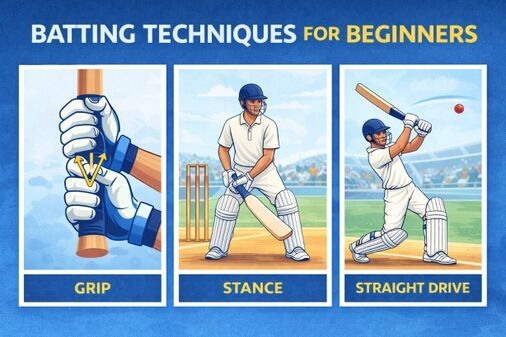
1. Correct Grip – The First Step
One of the most important cricket batting techniques is holding the bat correctly.
-
Place your top hand firmly on the handle.
-
The bottom hand should be relaxed.
-
Both “V” shapes formed by thumb and index finger should align straight down the bat.
A proper grip gives better control and improves shot timing.
2. Balanced Batting Stance
Your stance determines your balance and movement. Good cricket batting techniques always start with a stable stance.
-
Feet shoulder-width apart
-
Knees slightly bent
-
Head still and eyes level
-
Weight evenly distributed
A balanced stance helps you react quickly to both fast and spin bowling.
3. Proper Backlift
Backlift is how you lift the bat before playing a shot. Among essential cricket batting techniques, this improves power and timing.
-
Lift the bat smoothly
-
Keep it aligned with the stumps
-
Avoid exaggerated movements
A straight backlift ensures cleaner bat-to-ball contact.
4. Footwork – The Key to Good Batting
Footwork is the backbone of effective cricket batting techniques. Without good foot movement, even talented players struggle.
Against Fast Bowlers:
-
Move forward for full-length balls
-
Go back for short balls
Against Spinners:
-
Step out to attack
-
Rock back for cut and pull shots
Quick footwork helps in shot selection and reduces the risk of getting out.
5. Playing Straight Drives
The straight drive is considered the most classical shot in cricket. Basic cricket batting techniques emphasize playing straight before attempting fancy strokes.
-
Watch the ball carefully
-
Keep your head over the ball
-
Follow through straight
Practicing straight drives builds strong fundamentals.
6. Shot Selection and Patience
Good batting is not about hitting every ball. Smart cricket batting techniques include choosing the right delivery to attack.
-
Leave balls outside off stump
-
Defend good-length deliveries
-
Attack loose balls
Patience helps beginners build longer innings.
7. Watching the Ball Closely
One golden rule of cricket batting techniques is keeping your eyes on the ball until it hits the bat.
Many beginners get out because:
-
They close their eyes
-
They look up too early
-
They pre-decide shots
Concentration improves timing and accuracy.
Read for more blog – cricket pitch reading
8. Practice Defensive Shots
Defense is just as important as attacking. Strong cricket batting techniques include mastering defensive strokes.
Practice:
-
Forward defense
-
Backward defense
-
Soft hands to avoid catches
A solid defense frustrates bowlers and builds confidence.
Common Mistakes Beginners Make
-
Holding the bat too tightly
-
Poor foot movement
-
Playing across the line
-
Trying big shots too early
-
Ignoring basic drills
Avoiding these mistakes will help you improve faster.
Tips to Improve Faster
-
Practice daily in nets
-
Work on fitness and reflexes
-
Watch professional batsmen
-
Get feedback from coaches
-
Focus on basics before advanced shots
Consistency in practice strengthens your cricket batting techniques over time.
FAQ
1. What are basic cricket batting techniques?
Basic techniques include correct grip, stance, footwork, backlift, and proper shot selection.
2. How can beginners improve batting quickly?
Regular net practice, focusing on fundamentals, and improving footwork help beginners improve faster.
3. Why is footwork important in batting?
Footwork allows better balance and positioning, making it easier to play different types of deliveries.
4. Should beginners focus on power hitting?
No, beginners should first master basic cricket batting techniques before attempting aggressive shots.
5. How important is watching the ball?
Watching the ball closely improves timing and reduces chances of getting out.
6. Can defensive play improve batting skills?
Yes, strong defensive skills build confidence and help in playing longer innings.