


Why Pitch Reading is Important in Cricket: A Complete Guide
Cricket is not just about talent and technique; it is also about understanding conditions. One of the most underrated skills in the game is cricket pitch reading. From captains and bowlers to batters and coaches, everyone relies on pitch assessment to make key decisions. Knowing why pitch reading is important can often be the difference between winning and losing a match.
In this article, we explain cricket pitch reading, why it matters so much, and how it influences every aspect of the game.
What Is Cricket Pitch Reading?
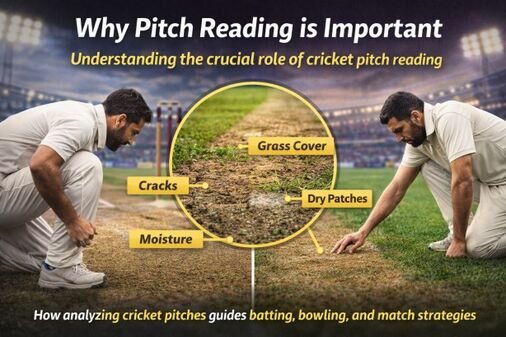
Cricket pitch reading is the process of analyzing the surface of the pitch to understand how it will behave during a match. This includes observing:
-
Grass coverage
-
Cracks or dryness
-
Moisture content
-
Hardness of the surface
Proper cricket pitch reading helps teams predict bounce, pace, turn, and swing, allowing them to plan strategies accordingly.
Why Pitch Reading Is Important in Cricket
Understanding cricket pitch reading is crucial because the pitch directly impacts how the ball behaves. A good pitch assessment helps players prepare mentally and technically before the first ball is bowled.
Whether it’s a green seamer, a dry turning track, or a flat batting surface, pitch reading shapes the entire match.
Impact of Pitch Reading on Team Strategy
1. Toss Decisions
One of the biggest benefits of cricket pitch reading is making the right toss decision. Captains decide whether to bat or bowl first based on pitch conditions.
-
Green pitch → Bowl first
-
Dry pitch → Bat first
-
Cracked pitch → Bat early before deterioration
A wrong decision at the toss can cost the match.
2. Batting Approach
Batters adjust their technique after proper cricket pitch reading.
-
On bouncy pitches, they play back-foot shots
-
On slow pitches, timing matters more than power
-
On turning pitches, footwork becomes critical
This is why experienced batters spend time studying the pitch before batting.
3. Bowling Plans and Selection
Bowlers benefit hugely from cricket pitch reading. It helps in:
-
Choosing between fast bowlers and spinners
-
Deciding bowling lengths
-
Selecting variations
For example, spinners dominate on dry pitches, while seamers thrive on grassy surfaces.
Role of Pitch Reading in Different Formats
Test Cricket
In Test matches, cricket pitch reading is vital because pitches change over five days. Teams plan for early movement, middle-day batting, and late spin assistance.
ODI Cricket
In ODIs, pitch reading helps teams set or chase totals wisely. A slow pitch may favor chasing smaller targets.
T20 Cricket
In T20s, cricket pitch reading helps identify whether the pitch supports big hitting or requires smart batting.
How Captains and Coaches Use Pitch Reading
Captains and coaches rely on cricket pitch reading to:
-
Finalize playing XI
-
Decide bowling rotations
-
Set field placements
Modern teams even use data and pitch reports, but visual inspection remains irreplaceable.
Common Mistakes in Pitch Reading
Even professionals sometimes misjudge pitches. Common mistakes include:
-
Overestimating grass coverage
-
Ignoring weather impact
-
Underestimating pitch deterioration
This shows how complex cricket pitch reading can be.
Read for More Blog – swing vs seam bowling
How Players Can Improve Pitch Reading Skills
Players can improve cricket pitch reading by:
-
Observing domestic pitches regularly
-
Watching experienced players
-
Learning basic soil and grass behavior
-
Practicing adaptability
Better pitch understanding leads to smarter cricket.
Conclusion
The importance of cricket pitch reading cannot be overstated. It influences toss decisions, team selection, batting approach, and bowling strategies. Teams that master pitch reading consistently outperform those that rely only on skill.
In modern cricket, where margins are small, understanding why pitch reading is important gives teams a crucial competitive edge.
FAQ
1. What is cricket pitch reading?
Cricket pitch reading is the analysis of pitch conditions to predict how it will behave during a match.
2. Why is pitch reading important before the toss?
It helps captains decide whether to bat or bowl first based on pitch behavior.
3. Does pitch reading matter in T20 cricket?
Yes, it helps teams choose the right batting and bowling strategy.
4. Who is best at pitch reading in cricket?
Experienced captains, coaches, and senior players usually excel at pitch reading.
5. Can pitch reading change during a match?
Yes, pitches evolve due to weather, wear, and match duration.
6. How can beginners learn cricket pitch reading?
By observing matches, studying different pitches, and gaining playing experience.