


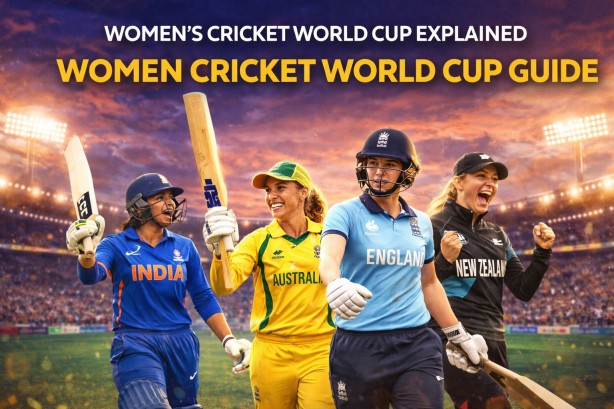
Women’s cricket has grown massively over the last two decades, and the Women’s Cricket World Cup stands at the center of this rise. From packed stadiums to record-breaking performances, the tournament now attracts global attention similar to men’s cricket.
This women cricket world cup guide explains everything you need to know—history, format, teams, qualification, winners, and why the tournament is so important for the future of women’s sports.
What Is the Women’s Cricket World Cup?
The Women’s Cricket World Cup is the premier international tournament in women’s cricket, organized by the International Cricket Council (ICC). It determines the world champion in women’s international cricket and is considered the highest level of competition in the women’s game.
The tournament is played in ODI format (50 overs), while a separate Women’s T20 World Cup exists for the shorter format.
History of the Women’s Cricket World Cup
The Women’s Cricket World Cup began in 1973, making it older than the Men’s Cricket World Cup, which started in 1975. The first tournament was held in England and featured just seven teams.
Over the years, the competition has expanded in scale, professionalism, prize money, and viewership. What started as a modest event is now a global spectacle with millions of fans worldwide.
Key Milestones
-
1973 – First Women’s Cricket World Cup
-
1993 – ICC officially takes control
-
2017 – Tournament gains massive global attention
-
2022 – Record-breaking attendance and streaming numbers
This women cricket world cup guide highlights how the tournament has evolved into a powerful platform for women athletes.
Tournament Format Explained
The Women’s Cricket World Cup usually follows a round-robin + knockout format.
Standard Format
-
8 teams participate
-
Each team plays every other team once
-
Top 4 teams qualify for the semi-finals
-
Winners of semi-finals advance to the final
This format ensures fairness and allows teams to recover even after a slow start, making the tournament highly competitive.
How Teams Qualify for the Women’s Cricket World Cup
Qualification is based on ICC rankings and qualification tournaments.
Qualification Path
-
Top teams qualify automatically based on rankings
-
Remaining teams compete in the Women’s Cricket World Cup Qualifier
-
Hosts usually receive direct qualification
This system gives emerging teams a chance to compete on the world stage, helping grow women’s cricket globally.
Read For More Blog – Powerplay rules in cricket
Top Teams in Women’s Cricket World Cup History
Several teams have dominated the tournament over the years.
Most Successful Teams
-
Australia – The most successful team with multiple titles
-
England – Strong contenders with consistent performances
-
West Indies – Famous for their 2016 triumph
-
India – Regular finalists and semi-finalists
Australia’s dominance is a key highlight in any women cricket world cup guide, as they have set unmatched standards in fitness, skill, and depth.
Famous Players in Women’s Cricket World Cup
The tournament has produced legendary players who inspired generations.
Iconic Names
-
Belinda Clark (Australia)
-
Mithali Raj (India)
-
Meg Lanning (Australia)
-
Charlotte Edwards (England)
-
Ellyse Perry (Australia)
These players didn’t just win matches—they changed how women’s cricket is perceived worldwide.
Importance of the Women’s Cricket World Cup
The Women’s Cricket World Cup is more than just a tournament.
Why It Matters
-
Promotes gender equality in sports
-
Encourages young girls to take up cricket
-
Boosts funding and sponsorship in women’s cricket
-
Improves global visibility for women athletes
Every edition raises the standard of the game and creates new role models.
For more cricket training guides and updates, keep visiting todaycricketnews.com and take your game to the next level.
Women’s Cricket World Cup vs Women’s T20 World Cup
Many fans confuse the two tournaments.
| Feature | Women’s Cricket World Cup | Women’s T20 World Cup |
|---|---|---|
| Format | 50 overs (ODI) | 20 overs |
| Duration | Longer matches | Shorter, faster |
| Strategy | Endurance & planning | Aggression & speed |
Both are important, but this women cricket world cup guide focuses specifically on the ODI World Cup, considered the ultimate test of skill.
Future of the Women’s Cricket World Cup
The future looks bright.
-
More teams expected in future editions
-
Higher prize money and better broadcasting deals
-
Increased fan engagement through digital platforms
-
Growing popularity in countries like India, South Africa, and Sri Lanka
The ICC is investing heavily to ensure women’s cricket reaches new heights.
FAQs: Women Cricket World Cup Guide
1. What is the Women’s Cricket World Cup?
The Women’s Cricket World Cup is an ICC-organized international ODI tournament that decides the world champion in women’s cricket.
2. How often is the Women’s Cricket World Cup held?
It is generally held every four years, similar to the men’s version.
3. Which team has won the most Women’s Cricket World Cups?
Australia is the most successful team in Women’s Cricket World Cup history.
4. Is the Women’s Cricket World Cup different from the T20 World Cup?
Yes. The Women’s Cricket World Cup is played in 50-over format, while the T20 World Cup uses the 20-over format.
5. How do teams qualify for the Women’s Cricket World Cup?
Teams qualify based on ICC rankings and performances in qualification tournaments.
6. Why is the Women’s Cricket World Cup important?
It helps grow women’s cricket globally, promotes equality, and provides a platform for top female cricketers to showcase their talent.