


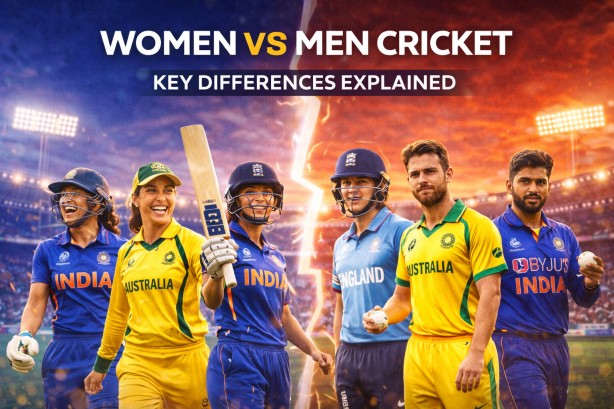
Cricket is one of the most popular sports in the world, played passionately by both men and women. While the basic rules remain the same, there are several important differences between women vs men cricket in terms of physicality, playing style, popularity, pay structure, and match dynamics.
Understanding these differences helps fans appreciate women’s cricket on its own merit rather than comparing it unfairly with men’s cricket. This article explains the key differences between women vs men cricket in a simple and unbiased way.
Basic Rules: Are They the Same?
At a fundamental level, the rules of cricket are the same for both men and women:
-
Pitch length (22 yards)
-
Ball size (same for international cricket)
-
Bat size regulations
-
Scoring system and formats (Test, ODI, T20)
However, differences emerge in playing conditions, match structure, and physical factors, which influence how the game is played.
Physical Strength and Speed
One of the most noticeable differences in women vs men cricket is physical strength and speed.
Men’s Cricket
-
Higher average bowling speeds
-
More six-hitting power
-
Faster fielding and throwing speeds
Women’s Cricket
-
More emphasis on timing and placement
-
Greater reliance on skill and technique
-
Tactical shot selection
This difference does not mean women’s cricket is inferior—it simply emphasizes skill-based cricket over raw power.
Batting Style Differences
Men’s Cricket Batting
-
Power-hitting dominates modern formats
-
Higher strike rates, especially in T20s
-
Greater use of muscle shots
Women’s Cricket Batting
-
Strong focus on timing and classical strokes
-
Higher importance of running between wickets
-
Less brute force, more consistency
In women vs men cricket, women batters often build innings patiently, making matches more tactical and strategic.
Read for more Blog – Top Indian Women Cricketers 2026
Bowling Speed and Variations
Bowling is another key area where differences are visible.
Men’s Cricket Bowling
-
Fast bowlers regularly touch 140–150 km/h
-
Heavy reliance on pace and bounce
-
Aggressive short-pitch bowling
Women’s Cricket Bowling
-
Medium pace and swing bowling more common
-
Greater accuracy and consistency
-
Spin plays a larger role
This makes women’s cricket highly competitive, especially on slower pitches.
Fielding Standards
Fielding quality has improved massively in both formats.
-
Men’s cricket generally shows faster reflexes and stronger throws
-
Women’s cricket focuses on positioning, catching technique, and anticipation
The gap in fielding between women vs men cricket has reduced significantly over the last decade due to professional training and fitness programs.
Match Duration and Format Differences
One of the biggest structural differences in women vs men cricket is Test cricket.
-
Men play 5-day Test matches
-
Women play 4-day Test matches (rare but increasing)
In limited-overs cricket:
-
Women’s ODI: 50 overs (same as men)
-
Women’s T20: 20 overs (same as men)
The push for more women’s Test matches is growing globally.
Popularity and Media Coverage
Men’s Cricket
-
Larger global audience
-
Higher TV ratings
-
Greater sponsorship and endorsements
Women’s Cricket
-
Rapidly growing fan base
-
Increased media coverage in recent years
-
Major boost from leagues like WPL and The Hundred
While men’s cricket still dominates commercially, women’s cricket is closing the gap faster than ever.
Salary and Prize Money Differences
Pay disparity is a major talking point in women vs men cricket.
-
Men historically earn more through match fees and leagues
-
Women’s salaries were lower due to limited exposure
However:
-
Many boards now offer equal match fees
-
Prize money in ICC events is moving toward equality
-
Women’s leagues have improved earnings significantly
Progress is ongoing, though complete parity is still a work in progress.
Fitness and Training Levels
Earlier, fitness standards differed, but today:
-
Women cricketers follow professional fitness regimes
-
Strength training, endurance, and recovery are emphasized
-
Injury management has improved
Modern women’s cricket is far more athletic than it was a decade ago.
Strategy and Game Intelligence
One area where women’s cricket truly shines is strategy.
-
Women’s matches often involve smarter field placements
-
Better use of spin and variations
-
Tactical battles between bat and ball
Many fans feel women vs men cricket comparisons show women’s cricket to be more balanced and unpredictable.
Why Women vs Men Cricket Should Not Be Compared Negatively
Comparing women’s cricket directly to men’s cricket based only on power or speed is unfair.
Women’s cricket offers:
-
Better balance between bat and ball
-
More tactical depth
-
Greater emphasis on fundamentals
Both formats deserve appreciation for what they bring to the game.
Future of Women vs Men Cricket
The future looks promising:
-
More women’s leagues worldwide
-
Increased investment and sponsorship
-
Greater fan engagement
-
More international fixtures
Women’s cricket is no longer “emerging”—it is established and growing fast.
FAQs: Women vs Men Cricket
1. Is women’s cricket played with different rules than men’s cricket?
No, the basic rules are the same. Differences mainly exist in match duration, physical aspects, and playing style.
2. Why is bowling speed lower in women’s cricket?
Due to natural physical differences, women bowl at slightly lower speeds, but compensate with swing, accuracy, and variations.
3. Are women cricketers paid less than men?
Historically yes, but many cricket boards now offer equal match fees, and prize money is improving rapidly.
4. Is women’s cricket less exciting than men’s cricket?
No. Women’s cricket is more tactical and balanced, which many fans find equally or even more exciting.
5. Will women’s cricket become as popular as men’s cricket?
With growing media coverage, leagues, and grassroots support, women’s cricket is steadily closing the popularity gap.
6. Which format suits women’s cricket the most?
T20 and ODI formats suit women’s cricket well, though interest in women’s Test cricket is also increasing.